Introduction
Running production-grade Kubernetes clusters requires resiliency, scalability, and automation. In this project, I built a self-healing Amazon EKS cluster using Terraform and Cluster Autoscaler, demonstrating how infrastructure can automatically recover and scale based on workload demands.
The project highlights:
- Automated provisioning of VPC, EKS cluster, and node groups using Terraform
- Dynamic scaling of worker nodes with Cluster Autoscaler
- Resilient workloads that self-heal when nodes fail or pods are evicted
- Spot and on-demand instance management for cost optimization
This project showcases a production-ready cloud infrastructure workflow suitable for portfolios targeting Cloud, Kubernetes, or DevOps roles.
Architecture Overview
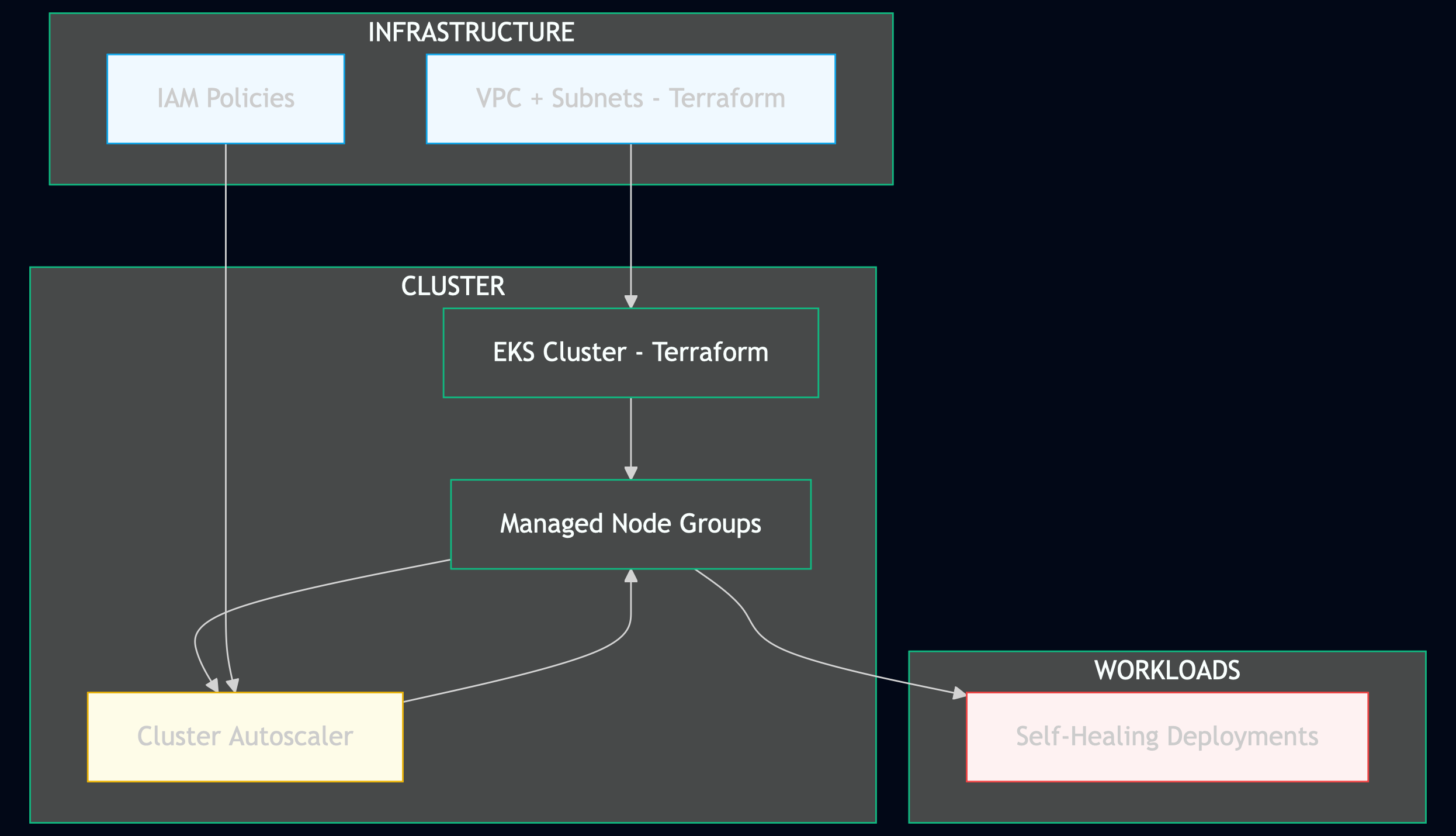
Diagram Explanation:
- Terraform provisions VPC, subnets, and the EKS cluster with managed node groups.
- Cluster Autoscaler observes node utilization and scales the cluster dynamically.
- Workloads (e.g.,
php-apache) automatically recover on node failure. - IAM Policies give the autoscaler necessary permissions to manage AWS resources.
Implementation Highlights
1. Terraform Infrastructure
- VPC & Subnets: Public, private, and intra subnets for cluster networking
- EKS Cluster & Managed Node Groups: Supports spot and on-demand instances
- IAM Policies: Cluster Autoscaler has secure permissions to adjust ASGs
2. Cluster Autoscaler
- Deployed in the
kube-systemnamespace with proper ServiceAccount and RBAC - Scales nodes up or down based on pending pods and utilization metrics
- Uses least-waste expander strategy to optimize cost
3. Workload Testing
- Deploy a sample PHP-Apache app with multiple replicas to simulate load
- Autoscaler adjusts node count dynamically based on resource requests
- Nodes can be terminated manually or via spot interruption to test self-healing
4. Self-Healing Behavior
- Kubernetes automatically reschedules pods when nodes fail
- Cluster maintains desired capacity and recovers workloads
- Spot instance interruptions are handled gracefully (can add AWS Node Termination Handler for production)
Key Takeaways
- Combining Terraform, EKS, and Cluster Autoscaler creates resilient, scalable infrastructure
- Node tagging and IAM policies ensure secure and automated scaling
- Testing workloads validates autoscaling and self-healing capabilities
- Spot instance usage optimizes cost without sacrificing reliability
Future Improvements
- AWS Node Termination Handler: Handles spot instance interruptions gracefully
- Observability Stack (Prometheus/Grafana): Monitor autoscaler behavior, logs, and metrics
- CI/CD for Terraform: Automate infrastructure updates with GitHub Actions or GitOps
- PodSecurity & Network Policies: Improve cluster security and compliance
- Multi-AZ / Multi-Region: For higher availability and fault tolerance
How to Run / Test
# Initialize Terraform
terraform init

# Review the plan
terraform plan

# Apply infrastructure
terraform apply

# Deploy a sample workload
kubectl apply -f finaldep.yaml

# Check Cluster Autoscaler logs
kubectl -n kube-system logs deploy/cluster-autoscaler